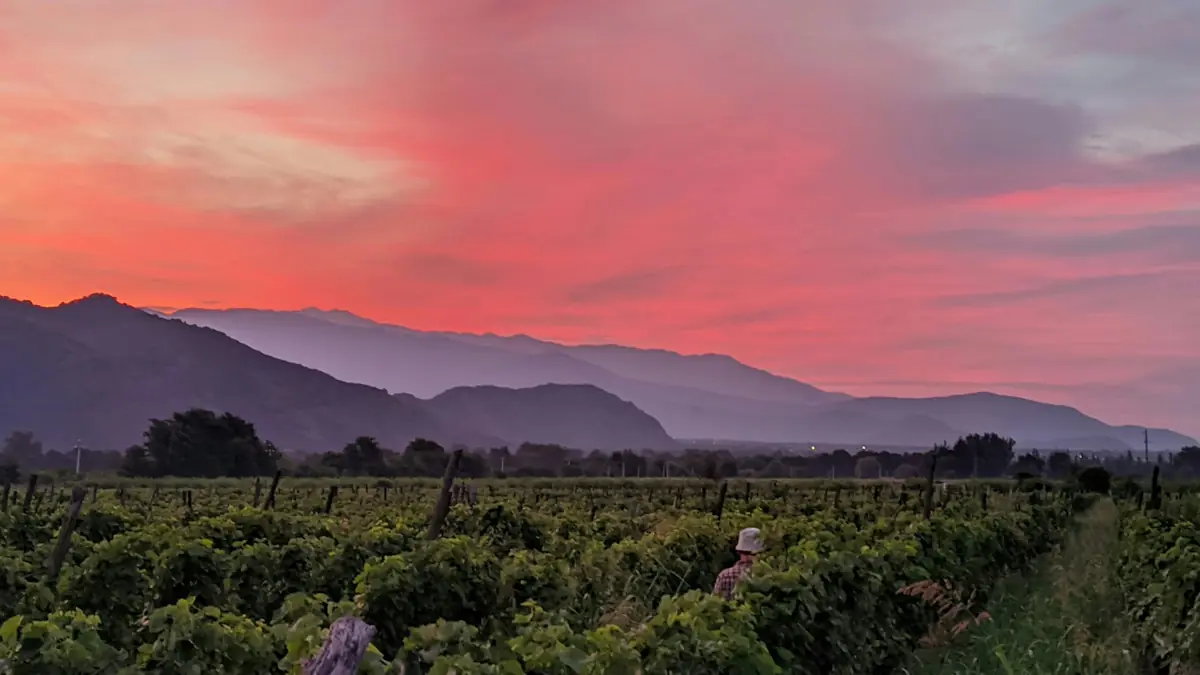
The Quebrada de Humahuaca, a UNESCO World Heritage canyon in Jujuy province, in Argentina's far north, is home to some of the highest commercial vineyards on earth, with a handful of plots sitting above 3,000 meters. The combination of intense ultraviolet light, wide day-night temperature swings and thin, stony soils produces wines with deep color, firm acidity and a style unlike anything grown in Mendoza or Salta at lower elevations.
This page covers who planted here first, how high the vines actually go, which grapes work at that altitude, and what to check before taking a webinar or course that references this region. If you are researching Argentine viticulture more broadly, see our list of wine webinars and the companion page on Argentine viticulture webinars and university courses.
How winemaking began in the Quebrada
Commercial planting in the area is recent. Around 2003, a change in regional land-use rules that had previously restricted the Quebrada to tobacco and sugar cane opened the door to vineyards. Agricultural engineer Fernando Dupont planted Syrah, Malbec, Tannat and Cabernet Sauvignon near Maimará, with his tasting room and main plantings sitting at roughly 2,400 meters above sea level. Sources differ on the exact year his first vines went in, with some citing 2001 and others 2004, but all agree he is one of the pioneers of the zone and today runs its largest winery, reportedly bottling around 23,000 liters a year.
In 2015, the Quebrada de Humahuaca received its own Geographical Indication (GI), formally recognizing it as a distinct wine zone within Jujuy, separate from the better-known Calchaquí Valley wines of neighboring Salta.
Just how high do these vineyards go
Altitude is the defining feature of the region, and the numbers are genuinely unusual by world standards. Several producers have, at different points, been described in the wine press as having the "world's highest vineyard":
- Finca Moya (Ayni winery, winemaker Claudio Zucchino): around 3,329 meters on the slopes of Cerro Mudana, roughly 5 hectares planted to Malbec, Syrah and Merlot. Depending on the source, it is described either as the world's highest vineyard or as the highest in South America and second-highest globally.
- Huichaira: about 4 hectares at roughly 2,710 meters, with its early vintages (from 2018) made as a co-fermented blend of Malbec, Cabernet Sauvignon and Syrah.
- Viñas del Perchel: planted around 2,650 meters, one of several smaller producers now active alongside Dupont, Zucchino and others.
- Altura Máxima (Colomé, in neighboring Salta's Payogasta, not strictly in the Quebrada): previously cited at 3,111 meters, the reference point that the Jujuy vineyards eventually surpassed in press coverage.
Because different outlets measure and rank these sites differently, treat "world's highest" claims as contested rather than settled, and check a specific winery's own current material if the exact ranking matters to your research.
Why altitude changes the wine
At 2,400 to over 3,300 meters, vines experience stronger solar radiation, cooler nights, and a shorter effective ripening window than at sea level or even at Mendoza's roughly 900-1,500 meters. Producers and wine writers covering the zone consistently point to a few effects:
- Thicker grape skins and deeper color, driven by UV exposure.
- Higher natural acidity, because big day-night temperature swings slow sugar accumulation relative to acid retention.
- Smaller yields and harder farming conditions, since terraces are often narrow and irrigation depends on snowmelt-fed channels.
Grapes and scale: what is actually planted
The region remains small. Estimates of total planted area vary by source but generally fall somewhere in the range of 20 to 26 hectares across all producers, a fraction of a single mid-sized Mendoza estate. Malbec is the leading variety, reportedly accounting for more than half of what is planted, with Syrah, Cabernet Sauvignon, Tannat and Merlot making up most of the rest.
| Producer | Approx. altitude | Main grapes |
|---|---|---|
| Fernando Dupont (Maimará) | ~2,400 m | Malbec, Syrah, Tannat, Cabernet Sauvignon |
| Viñas del Perchel | ~2,650 m | Malbec, Syrah |
| Huichaira | ~2,710 m | Malbec, Cabernet Sauvignon, Syrah |
| Ayni / Finca Moya | ~3,329 m | Malbec, Syrah, Merlot |
Checklist before you cite or study this region
- Confirm which specific vineyard a source is describing: "Quebrada de Humahuaca" and "Calchaquí Valley" (Salta) are neighboring but distinct GIs, and press articles sometimes blur the two.
- Treat "highest vineyard in the world" claims as disputed; cross-check the specific figure against at least two independent sources.
- Check publication dates on hectare and production figures; this is a fast-changing, very small region and numbers from 2017-2019 may already be out of date.
- If you plan to visit or study the area, note that most producers are small, family-run operations without the visitor infrastructure of Mendoza; contact wineries directly before planning a trip.
For related learning, see Argentine university courses on viticulture on our course overview page, and a broader look at Argentine viticulture webinars.
Sources used for this page include coverage from Decanter, Vinous, and winery profiles on South America Wine Guide.