Wine Regions and Education Destinations Around the World
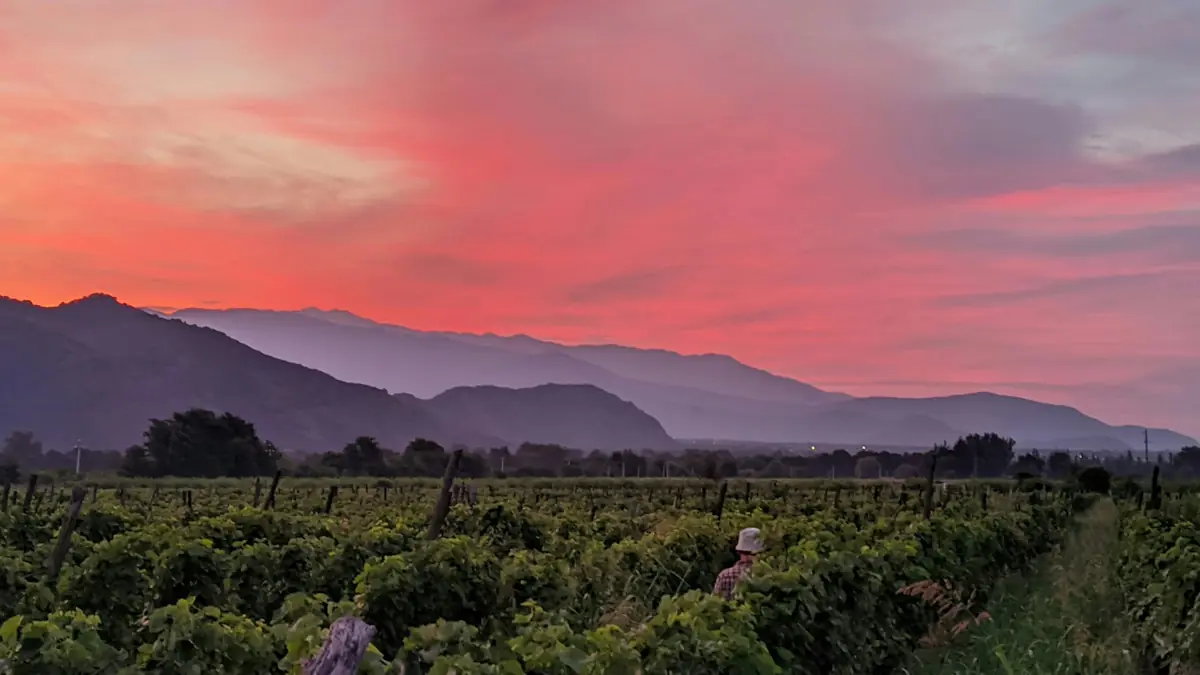
Wine regions and wine education are inseparable: almost every serious viticulture or oenology program sits inside, or close to, an actual wine-growing area, and the character of that region shapes what you'll actually learn there. A degree earned near Bordeaux teaches a different intuition than one earned in the high-altitude vineyards of Jujuy.
This page is a catalog of wine regions tied to international education, parallel to our university directory but organized by place instead of institution. For details on studying near one specific region, see our page on Mendoza; for a documented training example, see the real workshop held at Stellenbosch and the Telavi State University coverage of project activity. For open learning material not tied to any one region, see our resources page.
Why the region matters as much as the university
Climate, grape variety and local industry structure determine what a program can actually teach hands-on. A region built around high-volume, warm-climate grapes teaches different vineyard management than one built around steep, labor-intensive terraces. Before choosing a study destination, it's worth asking what the surrounding region will actually let you practice, not just what a syllabus lists.
Questions to ask about a region before you commit to studying there
- What is the region actually known for - which grape varieties and wine styles dominate local production?
- Is there an active wine-tourism infrastructure (certified routes, visitor centers) that would let you study tourism and visitor experience alongside production?
- How seasonal is the work - does the academic calendar line up with harvest, or will you miss it?
- Is the regional industry export-oriented or mostly domestic, which affects the kind of economics and marketing coursework makes sense there?
- Does the region have UNESCO heritage status or similar formal recognition, which often comes with more documented, publicly available regional history to study from?
Wine regions tied to international study
This is a starting list, not an exhaustive one. Confirm current university offerings directly with the institutions named in our university directory.
| Region | Country | Why it matters for study |
|---|---|---|
| Mendoza | Argentina | Argentina's main wine region, dominated by Malbec; home to UNCuyo's Facultad de Ciencias Agrarias and real high-altitude Andean vineyards in Luján de Cuyo and Valle de Uco. |
| Maule Valley | Chile | One of Chile's oldest and largest wine regions, historically known for Pais and now for a revival of century-old dry-farmed Carignan vines, promoted by the VIGNO growers' association. |
| Douro Valley | Portugal | UNESCO World Heritage wine region, formally demarcated in 1756; source of Port wine and increasingly of quality Douro table wine, near the University of Porto. |
| Penedès / Priorat | Catalonia, Spain | Penedès is a historic Cava-producing area near Universitat Rovira i Virgili's home region; Priorat holds Spain's top DOQ quality tier, built on slate soils and Garnacha/Cariñena. |
| Kakheti | Georgia | Georgia's largest wine region, producing most of the country's wine; known for Rkatsiteli and Saperavi and for traditional qvevri (clay vessel) fermentation; home to Telavi State University. |
| Stellenbosch | South Africa | South Africa's historic university wine town; Stellenbosch University's Department of Viticulture and Oenology hosted a real 2020 international training workshop for partner-university staff. |
| Jujuy / Quebrada de Humahuaca | Argentina | A small, extreme-altitude wine zone in Argentina's north, with vineyards reported above 2,500-3,300 meters and a Geographical Indication granted in 2015; a UNESCO World Heritage site. |
| Rioja | Spain | One of Spain's best-known and most formally regulated wine regions, with a long-established wine-tourism route certified under the national Rutas del Vino de España network. |
| Bordeaux | France | One of the world's reference wine regions; home to the Université de Bordeaux, a partner institution in the WINTOUR wine tourism master alongside URV and the University of Porto. |
| Montevideo / Canelones | Uruguay | Canelones department concentrates roughly two-thirds of Uruguay's vineyard area; the country's signature variety is Tannat, taught within the Universidad de la República's agronomy faculty. |
External references used above include SASEV for South African context and the OIV for general regional and statistical background.