Stellenbosch is South Africa's most established wine education center, built around a university department that has trained the country's winemakers for over a century. If you're considering South Africa for viticulture or oenology study, Stellenbosch University's Department of Viticulture and Oenology is the institution virtually every serious option runs through.
This page covers what the department actually offers, why Stellenbosch the town and region matters to that offering, and a documented piece of international cooperation history connected to the department. We also list what to confirm before applying from abroad.
Stellenbosch University's Department of Viticulture and Oenology
Housed in the JH Neethling Building on the university's main campus, the Department of Viticulture and Oenology (DVO) traces its teaching roots back to the late 19th century, shaped significantly by Professor A.I. Perold, remembered as the breeder of the Pinotage grape. Today the department runs an undergraduate BScAgric in Viticulture and Oenology, a four-year degree requiring pure mathematics and physical science at entry, plus postgraduate research programs (Stellenbosch University, Department of Viticulture and Oenology). Students train on the university's Welgevallen Experimental Farm, which includes more than ten hectares of vineyards and a commercial-scale teaching cellar, so the degree mixes classroom science with real production work rather than keeping the two separate. The department also works alongside the South African Grape and Wine Research Institute (SAGWRI) on research and postgraduate supervision.
What a prospective student should check
- Current entry requirements, including the mathematics and science prerequisites for the BScAgric
- Whether postgraduate research topics match your specific interest, since supervisors and active projects change year to year
- Visa and study-permit requirements for international students in South Africa
- Whether coursework is in English throughout, which it generally is at Stellenbosch, but confirm for any specific module
Why the region matters
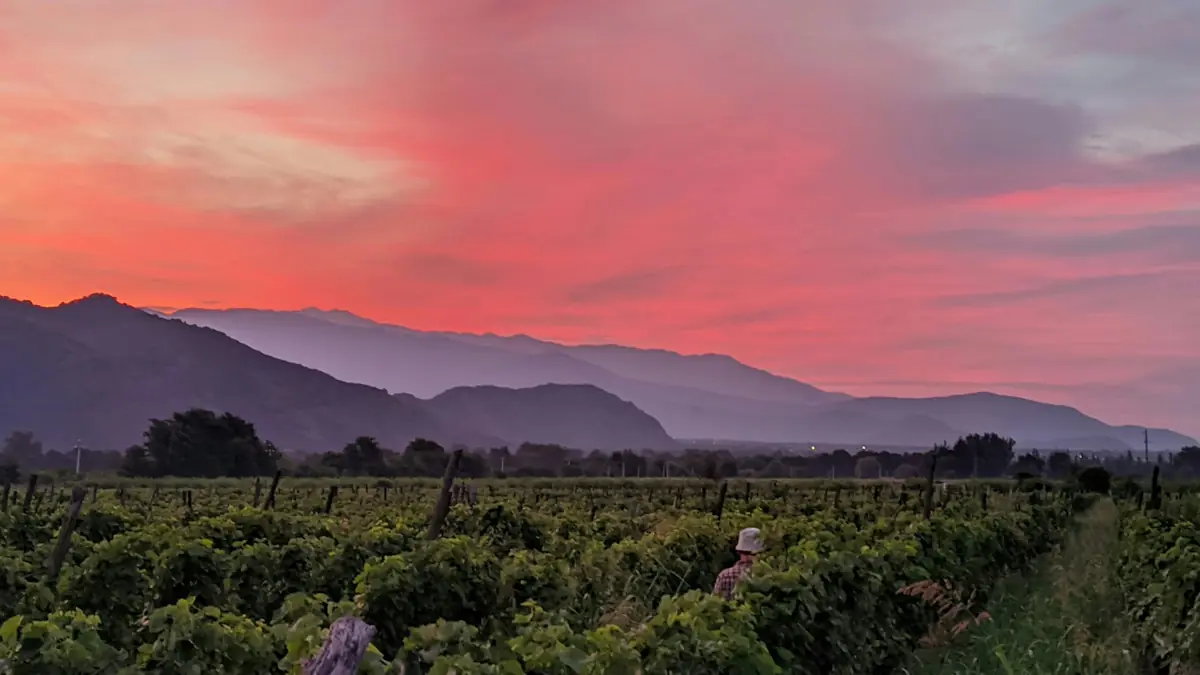
Stellenbosch sits at the heart of the Cape Winelands, one of South Africa's oldest and most recognized wine regions, with a Mediterranean climate, mountain-influenced microclimates and a dense concentration of wineries within a short drive of the university. That density is a practical advantage for students: harvest-season work, tasting-room internships and research partnerships with commercial producers are all close at hand rather than requiring long travel.
A documented piece of international cooperation
Stellenbosch University's Department of Viticulture and Oenology hosted a training workshop in March 2020 for academics and international-relations staff from partner universities in several wine-producing countries, run under VitaGLOBAL, an EU Erasmus+ funded project (2018-2023) coordinated by Universitat Rovira i Virgili in Spain together with the OBREAL network. The workshop was part of a broader effort to help partner institutions in Europe, Georgia, South America and South Africa develop shared postgraduate modules in viticulture and oenology (Stellenbosch University). That project is now closed and is distinct from Vitis Global, the site you are reading now; we mention it here only as documented history.
| Aspect | Detail |
|---|---|
| Department | Viticulture and Oenology, Stellenbosch University |
| Core undergraduate degree | BScAgric in Viticulture and Oenology (4 years) |
| Training facility | Welgevallen Experimental Farm, 10+ ha vineyard, teaching cellar |
| Region | Cape Winelands, Western Cape |
Next steps if you're considering Stellenbosch
- Review current admission requirements on the university's own site, since mathematics and science prerequisites are strictly enforced
- Look into the SASEV conference, run by the South African Society for Enology and Viticulture, as a way to see current industry research even before you enroll
- Contact the department directly about postgraduate supervision availability if you're aiming for a research degree
- Budget realistically for international tuition and cost of living, since these differ substantially from domestic rates
For broader context on international cooperation in wine education, see our page on activities, and for related conference coverage, see Vitis Global's notes on the 42nd SASEV virtual conference.