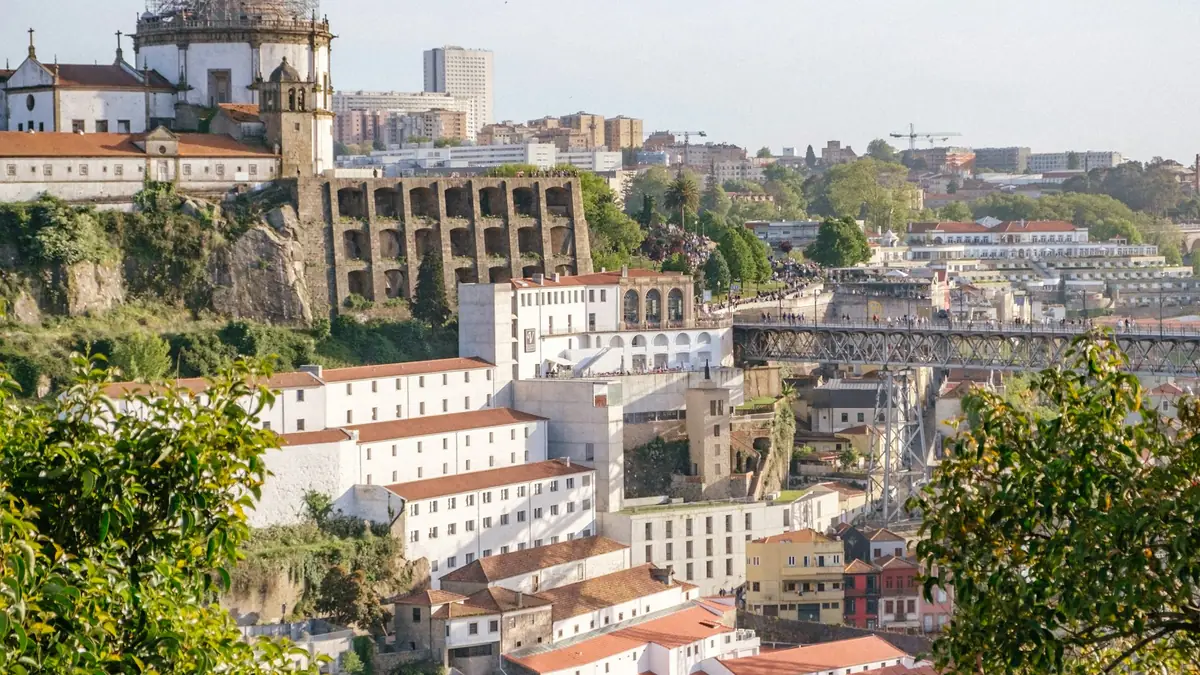
Porto and the Douro Valley sit together as one of the strongest combinations of wine history and academic opportunity in Europe: a UNESCO-listed terraced valley upstream, and a university downstream that co-runs an international wine tourism master's. If you're researching study options tied to Portugal's wine industry, University of Porto (U.Porto) is the institution to look at first.
This page covers the Douro Valley as a wine region, the historical link between the valley and Port wine, and what U.Porto actually offers for students interested in wine, including its role in a joint European master's program. We also note what to verify before assuming a program is still running as described.
The Douro Valley: the origin of Port
The Alto Douro Wine Region was inscribed as a UNESCO World Heritage site in 2001, recognized for terrain shaped over centuries by hand-built terraces on steep schist slopes. Local producers cut terraces known as socalcos or patamares into the hillsides, supported by dry stone walls, to make vine-growing possible on slopes that would otherwise be too steep to farm (UNESCO World Heritage Centre, Alto Douro Wine Region). The region was formally demarcated in 1756, making it one of the oldest regulated wine regions in the world, and it remains the exclusive source of Port, a fortified wine made from indigenous grapes including Touriga Nacional, Touriga Franca and Tinta Roriz, alongside a growing production of dry Douro table wines from the same vineyards.
For anyone studying viticulture, the Douro is a useful case study in extreme-terrain farming: manual labor, limited mechanization on the steepest slopes, and soils built up over generations rather than naturally deep topsoil.
University of Porto and the WINTOUR master's
University of Porto, through its Faculty of Sciences (FCUP), is one of three partner universities in WINTOUR, an Erasmus Mundus-labelled joint master's program in wine tourism, coordinated by Universitat Rovira i Virgili in Tarragona together with the University of Bordeaux's Institut des Sciences de la Vigne et du Vin (ISVV) and U.Porto (FCUP's WINTOUR program page). The structure moves students between all three cities over the first three semesters, with the final semester built around a work placement at a partner organization in the wine or tourism sector. WINTOUR has carried Erasmus Mundus status since 2015, with EU recognition extended through later cycles, though specific funding levels, tuition figures and application deadlines change from year to year and should always be checked on the consortium's own current site rather than assumed from older listings.
What to verify before applying
- Whether WINTOUR (or a successor program under a new name) is accepting applications for the specific year you're targeting
- Current tuition for EU-program-country students versus partner-country students, since these two tracks are typically priced very differently
- Which semester is taught at which university, since the sequence has shifted between cohorts
- Whether the English-language requirement and required test scores match what's published on U.Porto's or Bordeaux's current pages
| Element | Douro Valley | University of Porto |
|---|---|---|
| Recognition | UNESCO World Heritage (2001) | Erasmus Mundus consortium partner (WINTOUR) |
| Core subject | Port wine, terraced viticulture on schist | Wine tourism innovation and management |
| Best for | Field visits, understanding terrain-driven viticulture | Graduate study combining tourism, business and wine |
For related background on how this kind of multi-university cooperation has developed in the region, see our notes on internal meetings, and for a wider view of our research approach, see activities.
Visiting versus studying
It's worth separating two different goals. If you want to see the Douro's terraces and understand Port production, a short visit or wine-tourism trip will do more for you than any classroom. If you want a credential, WINTOUR or a Portuguese agronomy/enology degree elsewhere in the country is the more direct route, and the two are not substitutes for each other.
- Decide whether your goal is a visit, a short course, or a full graduate degree before researching further
- If it's a degree, confirm WINTOUR's current application cycle directly with University of Porto or the consortium's lead institution
- If it's a visit, look at Port wine lodges and quintas in the Douro that run structured tours and tastings rather than relying on general travel guides alone